
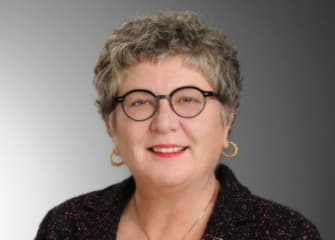
Kim Schatzel
This week Nevins & Associates President and CEO, David Nevins, sat down with Dr. Kim Schatzel, President of Towson University, to discuss the return to campus, balancing safety and learning, inclusion and more. Below is a condensed version of their conversation:
David Nevins: What is it like being a university president during a pandemic?
Kim Schatzel: When we first left campus after the stay at home order, we sent about 23,000 students home, 7,000 of them actually lived in residence halls. We then switched 4,000 faculty members and staff from working on campus to teleworking from home all in the course of 10 days. The sudden adjustment to remote learning was of course extremely challenging, but was made possible because everyone at Towson collaborated and we had a tremendous amount of support from the University System of Maryland (USM). At Towson, we are very fortunate to have access to the expertise and resources available through the University of Maryland system. My national colleagues unfortunately do not have access to the same resources and support that we do being a part of the USM, so I feel extremely lucky.
Every university president/dean/provost is constantly discussing the challenges brought on by COVID-19, but we are also constantly learning from each other. New information is coming out hourly, whether it involves COVID-19 testing, or other state or local government requirements, so we must pivot and be flexible. The last eight months have shown just how quickly higher education can pivot and how committed we are to our mission of advancing knowledge through implementation of innovative practice and applied research. Overall, I’m very proud of the Towson University community, especially seeing how much everyone continues to support each other.
DN: How have you handled the unpredictability of the pandemic?
KS: Plans for returning to campus actually started the week we left. I set up two committees: a return to campus committee and a return to the classroom committee. We started training our faculty last March for online teaching. We told every faculty member they needed to be prepared to pivot. We also started making investments in the necessary technology to enable online learning and the faculty center for academic excellence. Although disappointing, we planned for the eventuality of going entirely online months ago. Putting health and safety first was always very important to us.
The biggest challenge we had was lowering density on campus. We initially achieved this by having 85% of instruction done remotely and lowering density in the residence halls.
We made sure students and faculty knew that if they did not feel well they should stay home and work remotely. We also conducted training on social distancing, wearing a mask and all other safety guidelines.
We baseline COVID-19 tested everyone returning to campus and discovered that we had a surge in positive test results. We immediately contacted and began working with the Baltimore County Department of Health, who performed contact tracing and found no common factor among any of the positive cases. Given the uncertainty of the situation, we made the decision to switch to 100% remote learning. Thankfully, switching exclusively to online learning was not too much of a leap considering we were originally at 85%. Since we began planning for our return to campus, health and safety as well as the ability to pivot has always been very important to us.
DN: Many families and students were disappointed in the decision to switch to remote learning. How did you handle that?
KS: The hardest part of our decision to switch to online classes was having first year students, especially first generation college students, in the residence halls. I saw their excitement first hand and my heart truly goes out to them, since they did not have a normal senior year. When we changed to online, we were sympathetic to students' financial concerns. We made sure to refund all housing and dining costs and reduced all mandatory fees by 10%. We recognize the financial challenges of COVID-19, and we want to be responsive to those challenges.
I talked to students and families while they were moving out and although disappointed, there was understanding that health and safety is our first priority. Although the data and science said that we were doing everything right, the unexplained surge put the health and safety of the community at risk.
The decision to go entirely online was not easy by any means. Although online, we’re continuously making sure students are still engaged and having a positive experience.
DN: Higher education has more recently been familiar with online learning. Since you’ve been president, how do you feel about that today and what the future holds for the traditional campus experience?
KS: I started teaching online in an MBA program 20 years ago, when online learning was being pioneered. Most people who have done research in this area will tell you that for graduate students online learning works quite well. Part of the reason it works for graduate students is that those individuals approach a learning environment differently and can facilitate their own learning.
For undergraduate students having faculty mentors, classmates and being on campus is highly beneficial. Many of our students are meeting people with different backgrounds and experiences from them for the first time. They are then living with them, engaging with them and learning completely new perspectives from them. I don’t think that those experiences can be replaced by the online learning environment. I firmly believe the impact of university campuses won’t change.
Where I think discussion of the value of being on campus will occur are university campuses with substantially high price tags. A university like Towson is a top 100 public institution that has affordable, accessible high quality education and offers great value and experiences.
DN: Are you planning to return to campus for the spring semester?
KS: Fortunately, the spring is five months away and we are still planning to return to campus. I’m remaining optimistic because a lot can change in five months. The colder weather will also weigh into the decisions we make, as well as the flu season. We did initially plan to go entirely remote after Thanksgiving break because of concerns of a serious flu season.
DN: Your priorities at Towson University have helped shape the campus -- one being a culture of philanthropy among students. Are those the things being threatened by online learning?
KS: I think that the experiences outside of the classroom and the friendships that students make have a great impact on the affection you feel for your institution. Graduate students tend not to be as philanthropically attached to their campuses as undergraduates. The reason being that undergraduate is your first time away from home where you meet your friends for life and have an irreplaceable experience.
DN: We seem to be on the verge of turning Towson into a college town with a great national reputation. Tell me about how important Towson’s development is?
KS: I’m now in my fifth year and when I first joined the Towson University community, I saw it as an opportunity area where I thought we could make an enormous impact with having such a dense town next door. There are so many living and recreational opportunities so close to us. Having three major hospitals and two universities within a couple of miles made the potential enormous.
Towson University wants to have a footprint in Towson. The new student housing complexes being developed will lead to tremendous vibrancy in Towson and will attract young families who want to live in a great town with access to the entertainment and cultural activities that the universities provide. We’re excited about expanding our impact within the community and being the anchor institution. Towson University has a great commitment to the greater Baltimore region's success.
DN: Anything to add?
KS: I am just really pleased that Towson University’s enrollment has remained strong. It confirms to me that the value of a Towson University education is not only recognized in Maryland, but also across the Mid-Atlantic region.
Recently, Washington Monthly affirmed what we aspire to be — a university that offers great value and life-changing opportunities for its students, through research, civic engagement, public service and rigorous academic programming. In analysis of federally-shared data, TU ranked No. 30 among public institutions in the nation. We were also recognized among the top 35 nationally in both value and social mobility — which is especially important now with the inequalities exposed by the COVID-19 pandemic and the nationwide focus on racial injustice. TU is Maryland’s university of opportunities.
Another thing I didn’t mention that I’m also proud of is the fact that about 50% of our community are students of color. 30% of whom are African American, which is double the percentage we had four or five years ago. We also have the second highest graduation rate in the state, and we’re the only Maryland university where there is no completion gap between minority and majority students. We are one of a handful of universities nationally where all students succeed inclusively. Towson University is reflective of Maryland’s demographics, which is soon to be a majority-minority state. We are committed to being a Maryland institution that supports the state’s population. I made sure that inclusion was a hallmark of my administration, leadership and legacy.

