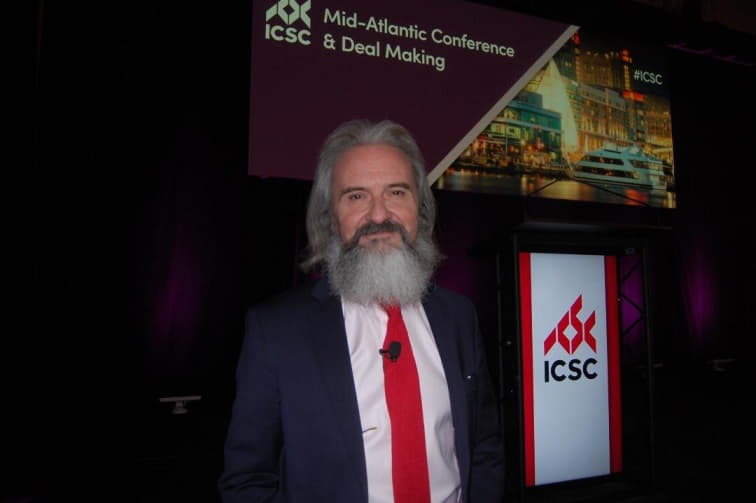
Howard Saunders
“The American consumer has everything - just look at your closet to see the hordes of shoes and clothing that are scattered everywhere - as we have transformed into a gluttonous society, much like King Henry VIII,” Howard Saunders, the featured speaker at this week’s ICSC Mid-Atlantic Deal Making Session told a lunchtime audience at the Gaylord National Resort and Convention Center. “The truth is – we don’t need anything else. In addition, iconic brands like Macy’s are closing stores left and right because many retailers have not figured out to deal with a world in which a mobile device has the power to perform shopping - instantaneously - from every corner of the globe. What is the traditional retailer to do with everything changing so rapidly?” he asked the lunchtime crowd gathered for the Monday keynote address.
“For starters, by helping society transition from a functional economy to a feel-good economy,” Saunders, billed as a Retail Futurist, continued. “The consumer of today increasingly brings an ‘it’s all about me’ attitude to life and shopping. They are looking for the next Instagram moment of themselves posed in a fun environment that they can share with the world. Savvy retailers are beginning to understand that and, in response, are now conceiving spaces housed with a minimum of product that consumers can purchase. In its place are feel-good, entertainment spaces that make shopping seem like an afterthought. But in every corner, you can take a neat selfie of yourself doing something fun.”
Saunders proceeded to show the audience numerous examples of “brand playgrounds” on his PowerPoint presentation. He started with the Nike House of Innovation 000 in New York City featuring six levels of immersive experiences including the Sneaker Lab and the Sneaker Bar, spread out over 68,000 square feet of space.“It is all about connecting brands with people so consumers feel engaged with both the company and the products. Shopping soon follows,” he explained.
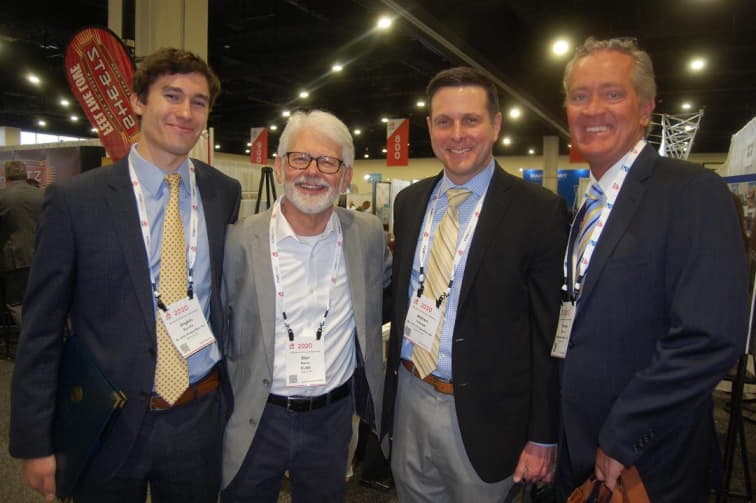
Angelo Munafo, St. John Properties; Stan Meros, NAI KLNB; Bill Holzman, St. John Properties and Tom Fidler, MacKenzie Commercial Real Estate Services
“What is more boring than buying a bed mattress?” he asked the audience. “Don’t tell that to Casper who conceptualized The Dreamery and charges consumers $20 for a 15-minute nap to rest and recharge. Oh yes, you can also buy their products if you look hard enough.”
An iconic whiskey brand has also ventured into the space. “Now then – how many people out there would like to have your name engraved on the lid of a Jack Daniel’s barrel?” Saunders queried the crowd. “I know – none of you. Just like me. But that will change if you visit The Jack Daniel’s Store and you witness the crowd of people standing in line for their customized lid. I bought mine – it was just $150.
“In the post-stuff era, retailers will prove just how creative they really are with concepts such as these. Digitallynative brands - defined as companies that only exist on the Internet – have also captured the attention of the consumer. I particularly like what Allbirds is doing,” he said.
Retail professionals discuss the experiential trend and local market
Here is what assorted professionals working in the retail industry, including a broker, two architects and an asset manager working for a Washington, D.C.-based REIT had to say about placemaking, brand playgrounds, the need to create experiences for consumers and the local leasing environment.
“All of us in the DMV area enter 2020 with a high level of optimism, for many of the same reasons why this market has always performed exceptionally,” explained Tom Fidler, Executive Vice President and Principal at MacKenzie Commercial Real Estate Services. “National retailers continue to specify this region because of the prospects for future demographic growth and the above average discretionary income. Really, nothing has changed for many years. Retailing is definitely moving into an experience-based environment. Consumers want to feel important and immersed with their brands.”
“Developers are integrating public spaces into their retail centers to create a civic feel to them. Even though they are privately-owned, they seem like they exist in the private realm,” said Rick Schneider, Principal at ISTUDIO Architects, an affiliate of JP2 Architects. “Consider this project (National Harbor) as an example. To the uniformed, with all the outdoor amenities and gathering spaces, it may appear to be something the county created and owns. The appeal is to make consumers comfortable and ease them into the shopping experience. Developers are also giving something back to the public with these accessible spaces.”
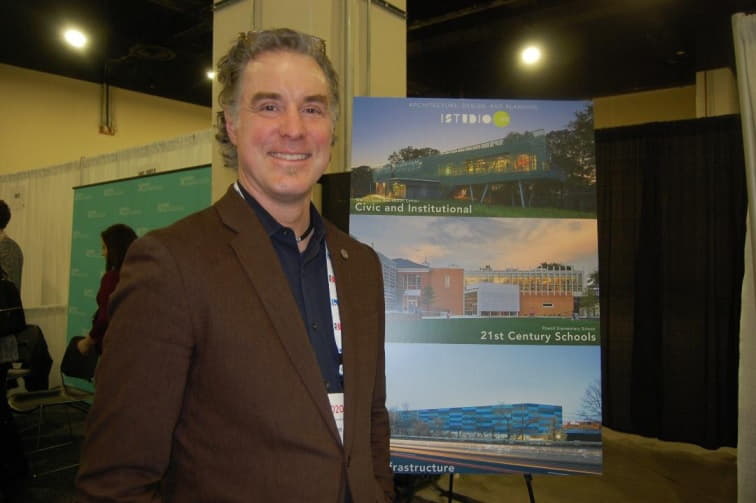
Rick Schneider, ISTUDIO Architects
“The three prongs of retail are an experiential bricks and mortar environment coupled with an ecommerce platform and great consumer value. Retailers and developers that can combine this trio into their business plan will be successful,” stated Deirdre Johnson, Vice President Asset Management at Federal Realty Investment Trust. “Creating both a digital and physical footprint with a simple brand promise resonates with consumers. We all must continually evolve to meet consumer expectations and then look towards exceeding those expectations. The one thing that we know is that they will change again. It is the challenge and excitement of retail.”
“Most retailers and developers cannot replicate the experiential environments that exist on 5th Avenue in New York City, but are recognizing the importance of creating a space rooting in authenticity,” said Bob Northfield, Principal with BCT Architects. “Retail centers are emphasizing pedestrian walkability and transforming strips into streets, buoyed by abundant landscaping to create an engaging atmosphere that encourages consumer to linger. The key is to make consumers comfortable and eager to return.”
Overheard at the show
“Retail is far from dead and, in fact, we are seeing a renaissance,” explained Leslie Fox, Senior Vice President, Membership and Strategy for ICSC. “Net operating income in 2019 hit an all-time high for all retailers with the fitness category leading the charge. More than 1/3 of the US population now exercises regularly with many having two gym memberships. The Halo Effect is also positively impacting retailers. When a store opens a bricks and mortar location, it receives a 37% bump in Internet traffic.”
“It might sound trite, but developers always have to be honest with the community,” said David Bramble, Managing Partner at MCB Real Estate. “We were asked at a community meeting if one byproduct of tearing down a building would be a surge in rats. I replied ‘yes’ and then watched the looks of horror on the assembled faces. But then, one attendee said, ‘well, I guess we can live with that short-term inconvenience in order to receive the great project you are delivering.’ It paid to be upfront and truthful.”
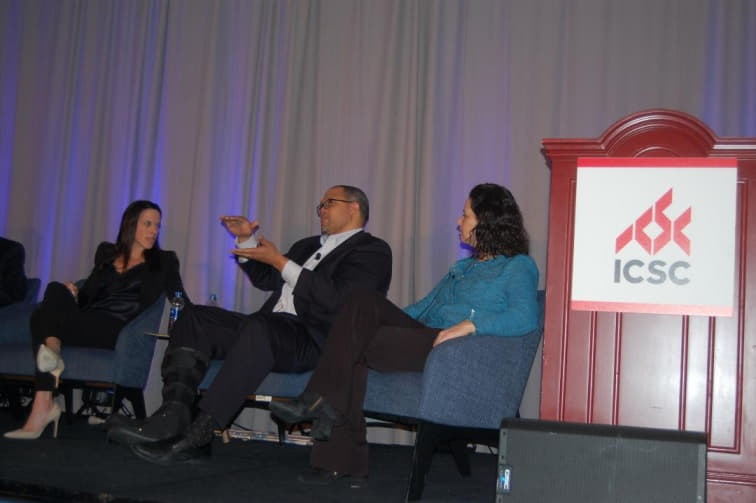
David Bramble (center), MCB Real Estate
“In 1948, George Orwell wrote 1984 and predicted that all Americans would have little devices in their homes that watched them and listened to their conversations,” explained Howard Saunders. “He was more right than wrong but didn’t envision us paying for the privilege. And, in 2008, just when the world was falling apart because of the stock market crash, consumers got their first taste of iPhones. They received ‘the great overload of data’ and that changed everything.”
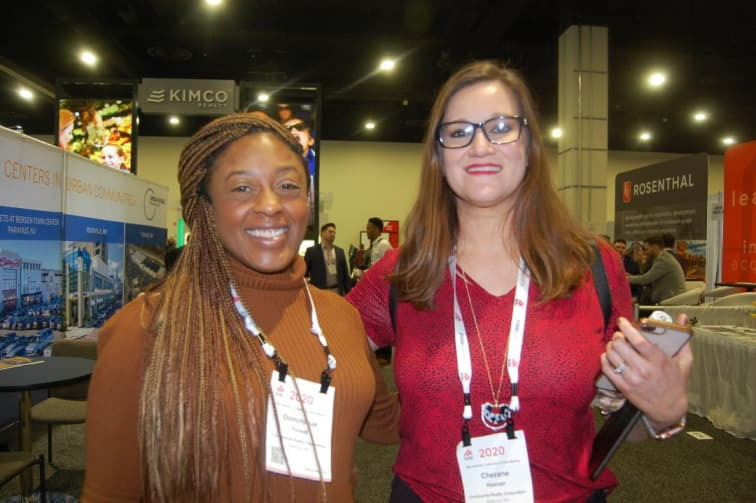
Dominique Threatt and Cherene Keenan of Continental Realty Corporation
Larry Lichtenauer is President of Lawrence Howard & Associates, Inc. a full-service advertising, marketing and public relations agency that works extensively in the shopping center industry and reports from ICSC conferences three times each year. He can be contacted at Larry@LawrenceHoward.com