
Summary
- DXC Technology posted Q2 numbers that suggest the transformation is underway.
- Stock only suits patient value investors.
- Discount of 38%, or a fair value of $30, assumes no growth in the next five years.
- Looking for a helping hand in the market? Members of DIY Value Investing get exclusive ideas and guidance to navigate any climate. Get started today »
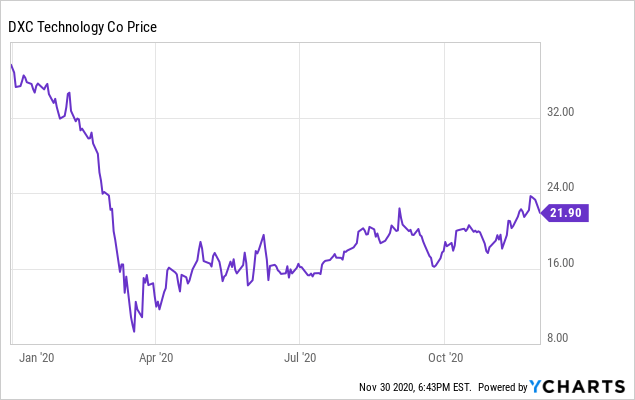
For the last few months, DXC Technology (DXC) formed an uptrend as value investors accumulated shares in the beat-up firm. The stock is a long way from the pre COVID-19 price of around $30. Profit taking in the Nasdaq and S&P 500 after the best November ever threatens to pull DXC stock lower.

DXC’s 5.88% drop on Nov. 30 suggests that bears will test support levels in the $17 - $21 range or at the 50-day and 200-day moving averages. After posting revenue, profit, and adjusted EBITDA that beat consensus estimates, bargain hunters should not give up yet on this turnaround company.
Strong Second Quarter (FY 2021)
DXC posted revenue of $4.55 billion, down a modest 6% from last year. It earned 64 cents a share. Its adjusted EBIT margin of 6.2% reflects a sequential improvement helped by its cost optimization strategy. At a book-to-bill ratio of 1.1 times, the company is in a good position to report a rebound in the business. Half of the bookings in the period are from new work, while renewals accounted for the other half. Importantly, CEO Mike Salvino said that it communicated with 38 of the 40 troubled accounts. By reaching out to them, DXC staff is keeping its key clients engaged and willing to invest in its solution.
 Data by YCharts
As shown above, DXC is in an uptrend but dipped recently after reaching $24.
As a value play, DXC does not enjoy the same valuations as other cloud companies. And because it's in the transformation phase, last quarter’s negative 7% quarter-on-quarter growth is a setback. In Q2, the Q/Q growth was a negative 1.8%. Investors still need DXC to post better performance in its cloud business. Growth investors have better software cloud companies to buy instead. This includes Salesforce.com (CRM) and Microsoft (MSFT). Once short sellers close their 20.7% short float on Fastly (FSLY), the stock will resume its uptrend.

